A senior colleague once gave me the grace of audience for a discussion about certain strategic matters. It is a person who is responsible for thousands of people around the world, that has held such responsibilities for many years, and who, in my opinion, has taken that responsibility in a remarkably smooth way, despite the fact that events and circumstances at times have been both adverse and chaotic. For a long time, I had been curious about how this individual has managed that balance throughout such a long period, so it was with great pleasure I indulged in the dialogue.
It is, by the way, the one person that I have ever met, whose leadership most resembles that of one of my favourite historical figures, Urban VIII. Unfortunately, and to the detriment of my social life, most people in my circle have never heard of Urban VIII. Those who have, often think nothing of him, or find him boring, even. But to me, this is exactly what makes him so interesting, and why he is likely to reappear in these essays more than once. Because, in my mind, a person who manages to be boring, while holding the highest catholic office throughout two decades of the 30 Years' War, must excel at being, what the English would call a smooth political operator. Therefore, in a Freudian slip, at one point during the discussion, I accidentally called my colleague that, who immediately reacted to the “political” part, which we redacted out of the conversation from that point, and I still agree that it is indeed likely to be a better description of the person and the context, albeit, from that point having had some difficulty letting go of the lingering thought that this might precisely be what a smooth political operator would successfully argue, too.
In any case, at the same time, friends of mine who have worked closely with this person, have suffered under a leadership style perceived as rigid, conservative and perhaps unforgiving. These people have been creative people with flamboyant ideas, but, to be fair, that have not had the wherewithal to create tangible effects in proportion to the cost of implementing these ideas, in the short term at least. Related to this, a dynamic around this person that has been interesting to follow from the outside, has been the rise of a challenger to this person’s position. The challenger was not, in my estimate, a particularly creative person, which one might think could be a strong characteristic for someone that tries to differentiate positively from a person who might be perceived as not being bold enough in many situations. The, so far, quite successful challenger has rather been a focused business person, to the extent of being short sighted. This might appear unsophisticated at first glance. However, if the tectonic plates of power politics do not collide anywhere near you, this is likely to be the most efficient operational model any business can use. At least, it is my current viewpoint that this is probably the reason why the challenger has been so successful. The reason why that approach is more efficient, is precisely because such an operational model does not require spending any resources on strategic initiatives, a percentage of which, however minuscule they might be, will fail in competition with an effective market. It also does not waste time on intelligence gathering and the building up of foresight, which in and of itself requires resources and coordination. I therefore call this operational model “the passive strategy”, since it is based on the active but implicit choice to let the effective market guide the development of the organizations strategic verticals through its organic day-to-day sales processes. Perhaps, I would have found “the shotgun approach” to be an equally appropriate epithet, if it did not fail, in my opinion, to catch this underlying sophistication in terms of the analysis of the organization’s intrinsic capacity, and the fundamental characteristics of the market.
The discussion my colleague and I had was mainly one about the value of business intelligence when making decisions, and, unfortunately for me, its progression further cemented a point of view that I have been more or less forced to develop since I started working in this field. That viewpoint is that strategic intelligence is very seldom worth while, since even a vanishingly small likelihood that any artificial push towards a new market will drain more resources from a functional current operation than it gains in the new environment, is enough for it to be a statistically unreasonable option to pursue. Moreover, the timing of such a move must rather precisely be at a point where a currently approached market is certain to fade away. At such a point in time, few organizations have neither the infrastructure in place, nor the right people in its cadre, to fundamentally change direction, and in most cases, it will be a safer bet to acquire a subsidiary that is already established in the new field, and simultaneously begin to downsize or completely liquidate whatever operations you are still running in the old field. Essentially, as the passive strategy relies on the effective market hypothesis for foresight, it efficiently surfs atop the waves of economic developments, wherever it is implemented, almost always.
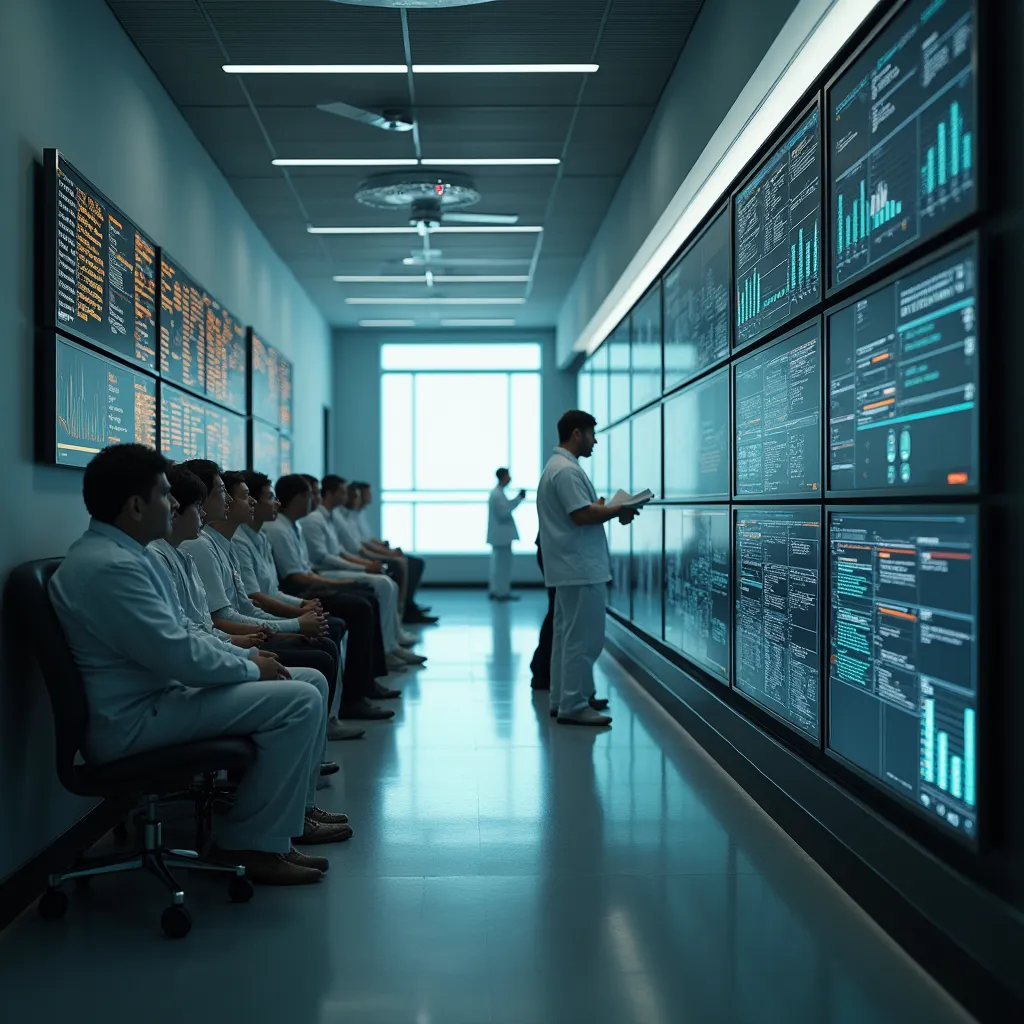
So, this leaves little room for an intelligence function to provide value. I found my senior colleague’s metaphor of running a nuclear power plant quite striking. There are a lot of buttons and screens, it is all very complex, and could be dangerous. It can be tempting to add more buttons, more screens, and to increase the screen resolutions. That would allow you to make more and more things happen yourself, and give you a heightened sense of efficacy. However, when you, sooner or later, have to take a quick break, you will find a long line of people waiting outside your control center, wondering what to do, and you will immediately realize that nothing in the power plant is working the way you thought, or even at all. After having suggested this, my colleague excused the analogy and asked if I thought it was cynical, but I did not. It is clear to me that leadership has always been, and always will be central to a functioning organization. In fact, if that was not true, would we not have entered an age where organizations had become obsolete? For teamwork to become unnecessary, would not humanity have to reach a point where a single individual better would further it than any constellation of people? It appears to me that such a paradoxical scenario is unlikely to ever occur, even in a very distant future.
Does this mean that strategic intelligence is practically infeasible? In my opinion, no. Strategic intelligence, implemented right, will decrease the number of buttons, screens and the screen resolution needed adapt to disruptive market events, freeing up time and resources for vital leadership activities. More concretely, I think few organizations would need much more than the following three parts.
Firstly, you will need a timeline of decisive events, i.e. key decisions that your most important clients will have to make, and that therefore lie beyond your control. How far you can predict such events into the future, I would call your strategic planning horizon. The distance of that horizon into the future is an important measure for determining what operational actions, if any, can wisely be taken within a timespan where they are still relevant, and given the resources you have at your disposal.
Secondly, you will need to identify the centers of gravity of these key clients, of your most important competitors, and of your most important partners. Center of gravity, in this context, is a military term coined by someone who tried to faithfully translate “Schwerpunkt”, which is probably closer to pivot point in most contexts, from the writings of Carl von Clausewitz, a veteran of the Napoleonic wars. I am imagining Clausewitz standing in front of what is soon to become a battlefield, spotting enemy cavalry in one end of the field, but then seeing a large group of enemy infantry in the middle of the field. He is then able to deduce that the cavalry is likely to swing around the infantry, like a pendulum, simply because the infantry cannot move as fast as the horses can run. Under its new and improved name, the center of gravity idea has evolved quite a bit from that original, more basic observation. In our time, it serves as a key concept in NATO strategic and operational planning doctrine, and carries a meaning closer to a characteristic, without which an organization cannot survive. It requires experience, hard work and creative thinking to identify such characteristics, but the identification of even one or two of them, can give a much improved picture of an organization’s capability to act in response to a particular phenomenon, compared to that which superficial information suggests.
Finally, one must identify likely outcomes resulting from the key decision points. This could be done in many ways, e.g. through role playing as client decision makers with subsequent computation of Nash equilibria. Obviously, calling the clients and asking what they think is a great complement to this, too. However, in my experience, it is rare that anyone except the CEO has any reliable prior insight into what will be the outcome at these decision points, even in large organizations running advanced operations, and even if they did, they might not necessarily want, or be able to tell you. Also, in my experience, it is more important to capture a significant enough range of likely scenarios than to pinpoint precise outcomes, since the former allows you to prepare for a statistically significant range of possible events, while the latter appears rather close to betting on green in roulette, in my mind.
With these three tools, an operationally workable framework is taking shape. Your strategic timeline allows you, in an efficient manner, to focus operational efforts towards the few disruptive phenomena you might potentially benefit from artificially countering, instead of falling back on the passive strategy, which fails in the case of disruption. A grasp of the centers of gravity of key surrounding entities lets you understand what they are able to do, should they attempt to adapt to their environment in some way. From this point, you can define operational tasks that are well balanced in terms of resource consumption, that carry purpose, are timely, and that continuously bring operational focus to what matters most.
This brings us to the final question of this essay, which I still ask myself, despite the chance I had to get an answer, straight from the horse's mouth, on that day. Under which circumstances would a smooth operator dare to wield such an intelligence framework in practice, while being a person whose proclivity is naturally counter to both innovation and disruption? In predictably calm seas, it is clear that this would be out of the question. However, must there not also exist a point where conservatism and risk aversion will have to give way to leaps of faith, in order to attempt to safeguard an operation heading towards inevitable storms? How many other ways than establishing a strategic timeline exist, that would stand a chance of providing a sufficiently systematic framework to predict and circumnavigate some of the storms, in a way superior to blindly riding all of them out? Is it perhaps even a supreme tool with which a smooth operator might ultimately beat the sophisticated short sightedness of a focused business person?
Comments